

Not all skin is the same, and not all skin analysis tools treat it that way. If you've been frustrated by generic skincare advice that ignores your actual texture concerns, the problem often starts before the products. It starts with how your skin gets analyzed. Skin texture analysis tech methods have advanced far beyond the basic mirror check, and knowing which approach fits your skin type, concerns, and budget can be the difference between a routine that works and one that wastes your time and money.
Table of Contents
- Key takeaways
- 1. Skin texture analysis tech methods: what to look for first
- 2. High-resolution imaging and multi-angle photography
- 3. AI-powered skin analysis software
- 4. UV and polarized light imaging
- 5. 3D dermoscopy and multispectral imaging
- 6. In vivo thermo-dermoscopy and physiological monitoring
- 7. Comparative overview of skin texture analysis methods
- My honest take on using these technologies
- Get a skin analysis built for your skin
- FAQ
Key takeaways
| Point | Details |
|---|---|
| Validation matters | Choose tools backed by clinical validation, like photonumeric scales, not just marketing claims. |
| AI adds real precision | Deep learning models trained on large image datasets detect texture, pores, and pigmentation with measurable accuracy. |
| Emerging tech goes deeper | Multispectral and physiological monitoring methods reveal what surface imaging alone cannot. |
| Human judgment still counts | Automated analysis works best when paired with expert review to filter out false positives from natural texture variation. |
| Match the tool to your needs | Professional devices and personal AI apps serve different purposes; knowing the difference saves money and time. |
1. Skin texture analysis tech methods: what to look for first
Before you commit to any tool or technology, you need a clear set of criteria. The market is full of devices and apps claiming to analyze your skin, but their actual capabilities vary widely.
Technical accuracy is the starting point. Look for tools that use validated assessment frameworks. The Cheek Smoothness Scale is one example of a clinically validated photonumeric scale that correlates directly with measurable surface roughness values, giving you a real benchmark rather than a vague score.
Consider what skin features the tool actually analyzes. Texture is one parameter, but the best systems also assess pores, pigmentation, UV damage, and hydration levels. A tool that only reads surface texture will miss half the picture.
Here are the core criteria worth evaluating:
- Imaging modes: Does the tool use standard white light, UV light, polarized light, or a combination?
- 3D or multi-angle capability: Single-angle snapshots miss texture variations on the sides of the face.
- AI involvement: Is the algorithm trained on diverse, large-scale clinical image datasets?
- Non-invasive design: The best tools require no contact, no discomfort, and no prep beyond a clean face.
- Recommendation integration: Does the analysis translate into specific, personalized skincare guidance?
- Progress tracking: Can you compare results over time to measure improvement?
Pro Tip: If a skin analysis tool does not disclose how its algorithm was trained or validated, treat its results with skepticism. Transparency about methodology is a sign of scientific credibility.
2. High-resolution imaging and multi-angle photography
High-resolution photography is the backbone of most professional skin texture assessment techniques. The key word is standardized. A single selfie tells you very little. A protocol that captures front, left, and right profile images under controlled lighting gives AI models the data they need to build an accurate facial map.
Image pre-processing matters just as much as the capture itself. Noise reduction and contrast enhancement clarify subtle texture differences that would otherwise blend into the background. This is where 3D surface reconstruction becomes valuable. By converting 2D images into a three-dimensional surface model, clinicians and algorithms can measure actual texture depth, ridge patterns, and structural irregularities rather than just visual appearance.
The VISIA Complexion Analysis System is a well-known professional example. It uses cross-polarized and UV photography to produce multi-layer skin maps. These maps separate surface texture from sub-surface concerns, which is information you simply cannot get from standard photography.
That said, high-resolution imaging has real limits. It excels at detecting surface features like fine lines, pore size, and uneven texture. It is less effective at revealing deeper structural changes in collagen or early inflammatory activity beneath the skin's surface.
3. AI-powered skin analysis software
AI has changed what's possible in skin diagnostics technology. The shift is not just about speed. It's about the depth and consistency of analysis that no human eye can replicate at scale.
Convolutional neural networks (CNNs) are the engine behind most modern AI skin tools. These models learn to recognize texture patterns, pigmentation morphology, pore geometry, and photodamage by training on enormous image libraries. AI systems trained on 70,000+ images can extract features like wrinkle depth, color distribution, and surface roughness to generate detailed skin health reports in seconds.
The practical benefits are significant:
- Consistency: An AI model applies the same criteria every time, unlike visual assessments that shift with lighting or examiner fatigue.
- Speed: Full facial analysis in under a minute.
- Personalization: AI-assisted analysis can generate product and treatment recommendations based on multiple simultaneous skin parameters.
- Accessibility: Consumer-facing AI apps bring professional-grade analysis to your phone.
The challenge worth knowing: AI models can struggle to distinguish between natural anatomical texture variation and actual skin conditions. This is called "texture noise," and it can produce false positives if the algorithm is not well-calibrated. The best advanced skin analysis methods address this by combining automated scoring with expert visual review.
Pro Tip: When using an AI skin analysis app, take your photo in consistent natural light each time you analyze. Lighting inconsistency is one of the biggest sources of inaccurate results, regardless of how good the underlying algorithm is.
4. UV and polarized light imaging
UV and polarized light imaging is one of the most underappreciated tools in skin texture assessment techniques. Standard white light only shows you what's already visible. UV light reveals sub-surface pigmentation, sun damage, and structural changes that have not yet reached the skin's surface.
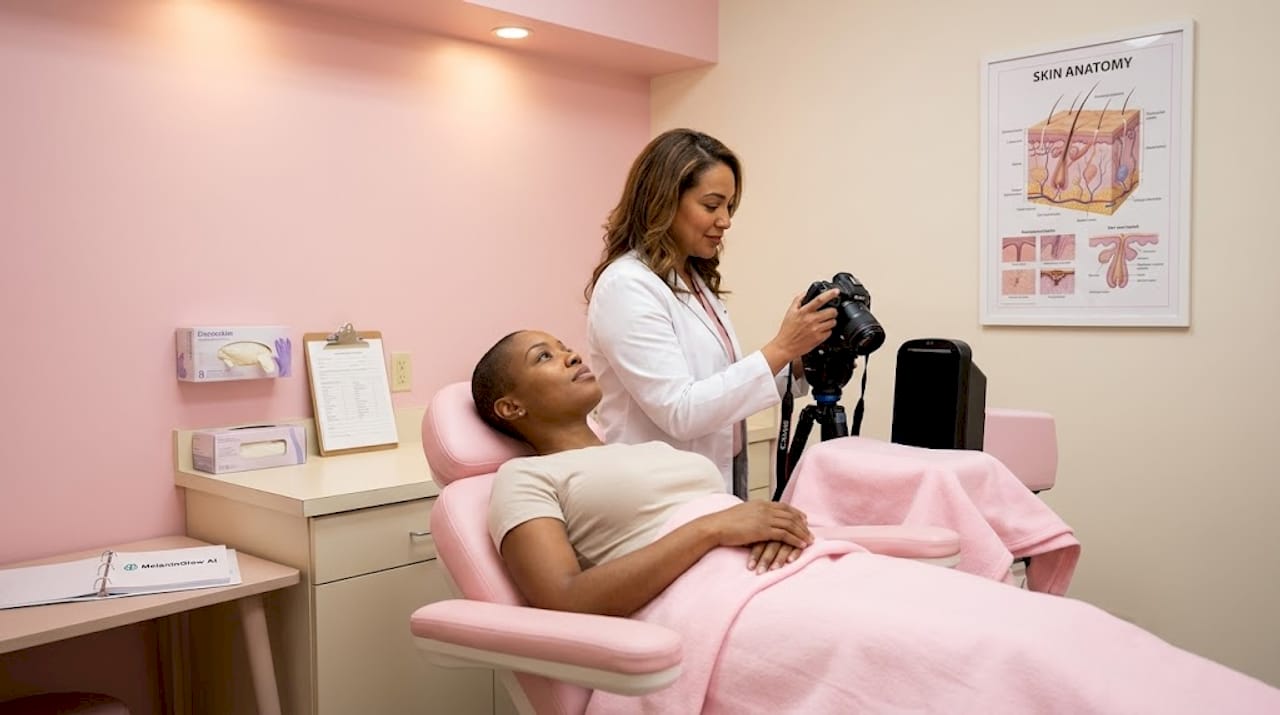
This matters enormously for proactive skincare. UV light exposes hidden damage before it becomes visible, giving you a window to intervene with targeted treatments before the problem worsens. For melanin-rich skin tones in particular, sub-surface pigmentation can be misread or missed entirely under standard lighting.
Polarized light works differently. It filters out surface glare to reveal texture and vascular patterns beneath the skin. Combined with UV, this dual-mode imaging approach is considered the gold standard for revealing photodamage and pigmentation that would otherwise go undetected.
Professional systems like VISIA use both modes simultaneously. Some consumer apps now incorporate polarized capture using phone attachments, though the quality gap between professional and consumer hardware remains significant.
5. 3D dermoscopy and multispectral imaging
This is where skin texture analysis moves beyond the surface entirely. Multispectral imaging uses different wavelengths of light to penetrate the skin at varying depths, revealing collagen distribution, blood vessel networks, and deep pigmentation that standard cameras cannot see.
Multispectral and polarized imaging can differentiate benign pigmentary disorders from early-stage skin cancer indicators. That level of diagnostic specificity was previously only available through biopsy or dermatologist examination.
Dermoscopy, traditionally a clinical tool for examining moles and lesions, has evolved into a broader skin texture diagnostic instrument. When combined with AI, dermoscopic images can be analyzed for subtle pattern changes that signal early pathology, making it a powerful tool for both dermatologists and informed skincare consumers.
| Method | What it reveals | Best use case |
|---|---|---|
| Standard dermoscopy | Surface texture, pigment patterns | Mole and lesion monitoring |
| Multispectral imaging | Collagen, vessels, deep pigmentation | Chronic conditions, early cancer detection |
| UV photography | Sub-surface sun damage | Proactive photodamage assessment |
| Polarized light | Vascular patterns, texture depth | Redness, texture irregularity analysis |
6. In vivo thermo-dermoscopy and physiological monitoring
The newest frontier in how to analyze skin texture goes beyond light entirely. In vivo thermo-dermoscopy uses microneedle sensors to measure skin temperature and mechanical properties in real time. This captures dynamic physiological data that no camera can provide.
Why does this matter? Skin temperature and elasticity are direct indicators of inflammation, hydration status, and structural integrity. For people managing chronic skin conditions or monitoring early signs of skin cancer, this real-time physiological data adds a layer of precision that imaging alone cannot deliver.
These sensors are minimally invasive and designed for in-clinic use currently, but the research trajectory points toward wearable and at-home applications. Future-oriented research suggests physiological monitoring will complement imaging, creating a more complete picture of skin health than any single method can provide today.
7. Comparative overview of skin texture analysis methods
Choosing the right tool depends on your goals, access, and budget. Here's how the main approaches stack up:
| Method | Accuracy | Depth of analysis | Cost | Best for |
|---|---|---|---|---|
| High-res multi-angle photography | High | Surface features | Low to moderate | Texture, pores, fine lines |
| AI-powered software | High | Multi-parameter | Low (apps) to high (devices) | Personalized recommendations |
| UV and polarized imaging | Very high | Sub-surface damage | Moderate to high | Pigmentation, photodamage |
| Multispectral imaging | Very high | Structural and vascular | High (professional only) | Chronic conditions, early detection |
| Thermo-dermoscopy | Emerging | Physiological properties | High (clinical only) | Inflammation, cancer monitoring |
A few practical points for choosing between these skin texture measurement tools:
- If you want accessible, daily-use analysis at home, AI-powered apps with standardized photo capture are your best starting point.
- If you are managing specific concerns like hyperpigmentation, melasma, or photodamage, seek out a professional clinic with UV and multispectral imaging capability.
- If you have a history of skin cancer or chronic inflammatory skin conditions, physiological monitoring and dermoscopy belong in your care plan.
The hybrid approach combining photonumeric scales with automated AI analysis consistently outperforms either method alone, because it catches the false positives that pure automation can generate.
My honest take on using these technologies
I've spent a lot of time looking at how people actually use skin analysis technology versus how it's marketed to them. Here's what I've found.
Most people jump straight to the most sophisticated-looking tool without asking whether it's validated for their skin type. That's a real problem. An AI model trained predominantly on lighter skin tones will produce less reliable results for melanin-rich skin. The accuracy of AI models depends directly on the diversity and size of the training dataset, and that information is rarely front and center in product marketing.
The other thing I've learned: texture noise is real, and it trips people up. Automated systems sometimes flag normal skin texture as a concern because the algorithm hasn't been calibrated well enough to recognize natural anatomical variation. If an AI tells you something alarming, get a second opinion from a clinician before overhauling your routine.
My actual recommendation is to start with an accessible AI tool that's been built specifically for your skin type, use it consistently under the same lighting conditions, and treat the results as a starting point rather than a verdict. Then, once or twice a year, invest in a professional assessment that uses UV or multispectral imaging to catch what your phone can't see. That combination gives you the frequency of personal monitoring plus the depth of professional diagnostics.
— Orinami
Get a skin analysis built for your skin
If you've read this far, you already know that generic skin analysis tools often miss what matters most for your specific skin. Melaninglow AI was built to close that gap. It uses advanced AI algorithms trained specifically for melanin-rich skin tones, analyzing texture, pigmentation, pore structure, and UV damage to generate personalized product recommendations that actually fit your skin.

Unlike broad-market tools, Melaninglow AI processes your images locally, meaning your photos are never stored or shared with third parties. You get detailed diagnostics, progress tracking over time, and recommendations you can act on today. If you're ready to stop guessing and start understanding your skin with the precision it deserves, this is where to begin.
FAQ
What are the most accurate skin texture analysis tech methods?
High-resolution multi-angle photography combined with AI-powered deep learning currently offers the highest accuracy for surface texture assessment. Adding UV and multispectral imaging extends that accuracy to sub-surface concerns like pigmentation and photodamage.
How does AI analyze skin texture?
AI models, specifically convolutional neural networks, are trained on large clinical image datasets to recognize patterns in texture, pore size, pigmentation, and wrinkle depth. Systems trained on tens of thousands of images can generate detailed skin health reports in seconds.
Can I analyze my skin texture at home?
Yes. Consumer AI apps with standardized photo capture protocols now offer meaningful skin texture assessment. For best results, photograph your skin in consistent natural light and use the same angles each session to enable accurate progress tracking.
What is texture noise in skin analysis?
Texture noise refers to normal anatomical skin variations that automated algorithms may misclassify as skin concerns. Expert visual confirmation alongside AI scoring is the most reliable way to avoid acting on false positives.
Are emerging methods like thermo-dermoscopy available for personal use?
Not yet. Thermo-dermoscopy and microneedle sensor-based physiological monitoring are currently clinical tools. Research suggests they will eventually complement personal-use imaging technologies, but for now they remain in professional and research settings.